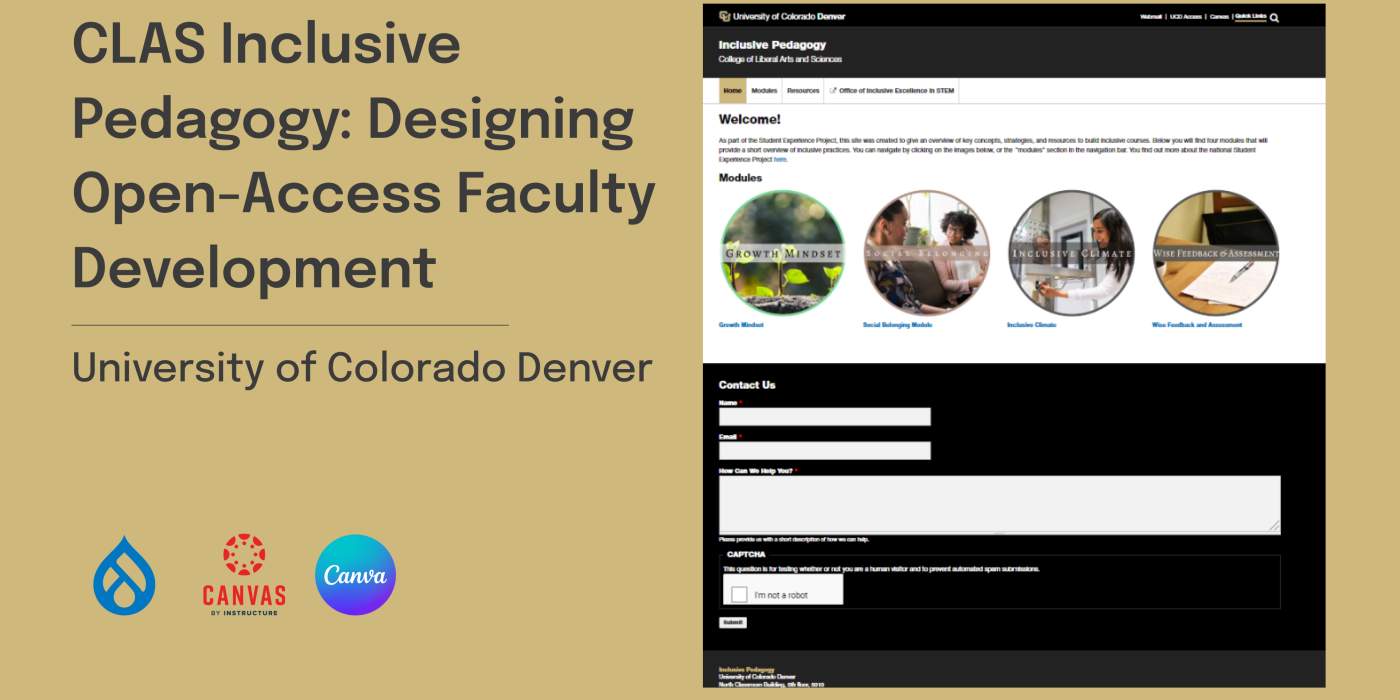
| Role | Organization | Tools | Team |
| Instructional Designer | University of Colorado Denver – College of Liberal Arts and Sciences, Office of Inclusive Excellence in STEM | Canva (wireframing), Drupal, HTML, Canvas LMS | Dr. Amanda Beyer-Purvis, Dr. Sean Morris, Tim Stalker (Webmaster), Richard Allen |
Project Overview
The College of Liberal Arts and Sciences (CLAS) Office of Inclusive Excellence in STEM had developed workshops for faculty and staff focused on inclusive pedagogy in STEM fields. While the intensive workshops were valuable, limited faculty availability created a barrier to participation.
Goal: Extend CLAS inclusive pedagogy resources into the digital space, making them accessible to faculty who couldn’t attend workshops.
Analysis
I met with Dr. Amanda Beyer-Purvis and Dr. Sean Morris to understand:
- Current projects and goals
- How workshops were implemented (target audience, requirements, marketing)
- Instructional content of workshops
- Future goals and faculty/staff barriers
Key Finding: After discussing several solutions, we found that limited time for staff to participate in workshops arose as a barrier.
Proposed Solution: Develop a web-based micro-course with resources, including a plug-and-play Canvas course shell.
I gathered material from Amanda that she wanted to be included in the micro-course, and then searched for additional resources (such as videos) that could be supplementary.
Target Audience: Faculty and staff, who would ultimately participate in the intensive inclusive pedagogy workshop. However, she did not want to limit the audience.
Design
Platform Evaluation:
Before developing, I researched methods to host the micro-course, including:
- Canvas: Had discussion board capabilities, but it was a closed-forum. Individuals would have to be affiliated with the University and sign up for the course, and due to the asynchronous nature, participation in the discussion board may not have been fruitful.
- Websites with discussion boards: Security and administrative management challenges
- Community of Practice via messenger apps (Slack, Discord, etc.): Security and administrative management challenges
Solution: We discussed setting up a meeting with the University’s Webmaster (Tim Stalker) to ask if I could develop a page / create an open-access webpage through the university’s web system.
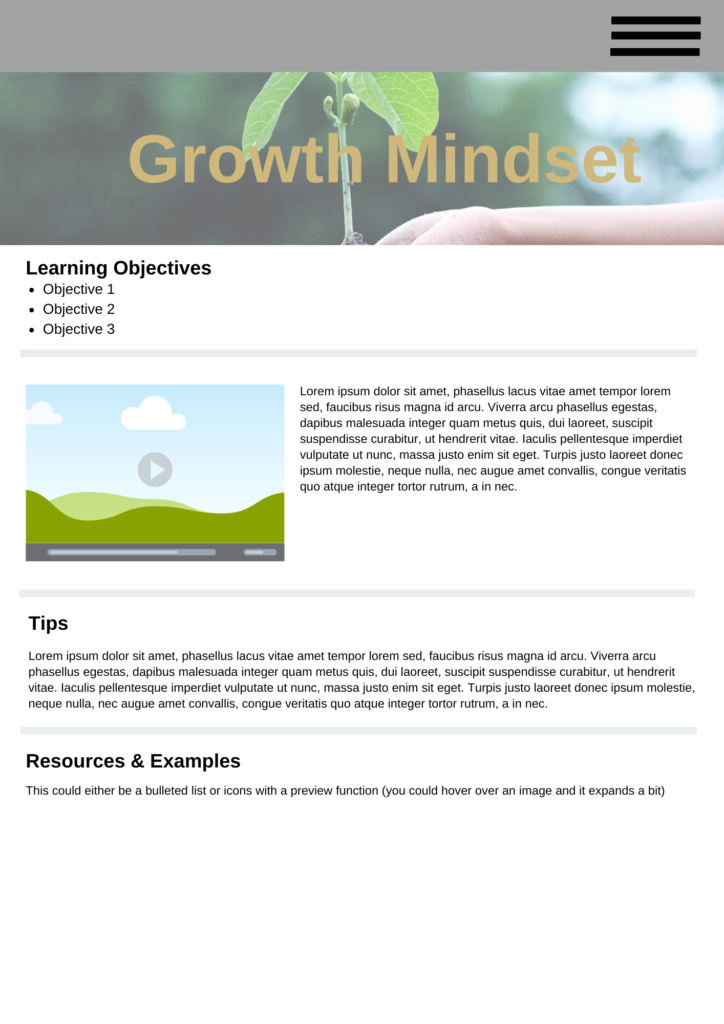
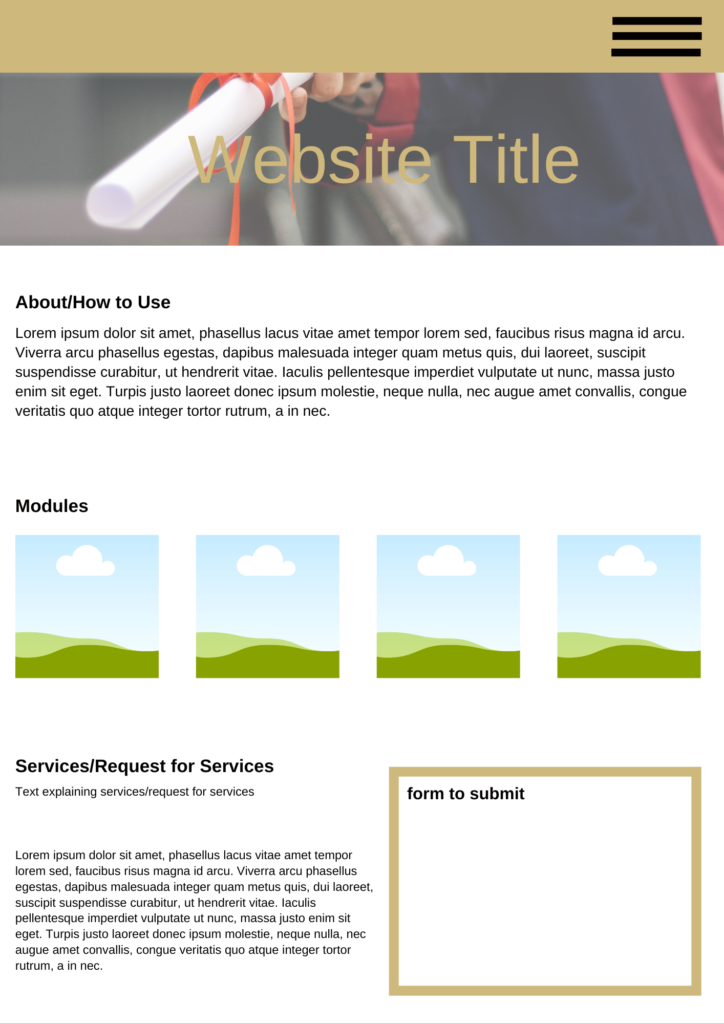
A wireframe was developed to show the solution that I proposed to Amanda. After approval, a meeting was scheduled with Tim to discuss if I could create a webpage from the University system.
I developed a wireframe in Canva to illustrate the proposed micro-course structure and presented it to Amanda for approval. After approval, I coordinated with the university webmaster (Tim Stalker) to discuss creating a page within the university’s Drupal system.
Development
Once access was granted, Tim and I met to review the Drupal site capabilities (Drupal). I:
- Tested functionality
- Gathered content and resources from Amanda
- Researched and identified supplementary resources (videos, articles)
- Developed the site with periodic check-ins with Amanda
- Added gathered content along with additional resources found through research
Implementation
A final review of the mini-course was conducted. Amanda presented the mini-course in a meeting with key stakeholders and received approval.
- Stakeholder Presentation: Amanda presented the micro-course to key stakeholders and received approval
- Launch: Webpage went live and is now managed by Amanda
Additional resources were developed
Beyond the micro-course webpage, I created:
- Canvas Course Shell: A customizable template that instructors can edit, containing information and examples about developing an inclusive course
- How-To Guide: Step-by-step instructions for using and customizing the Canvas shell
Deliverables
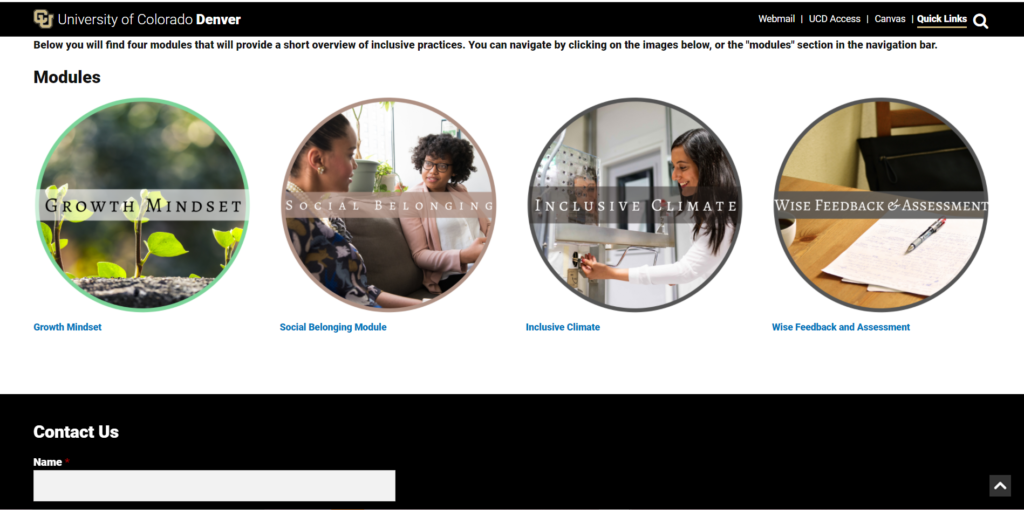
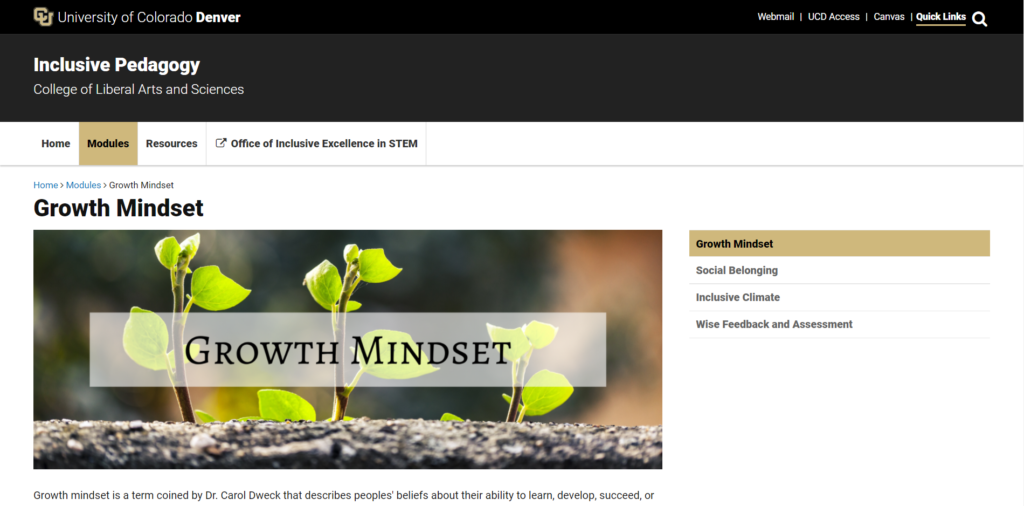
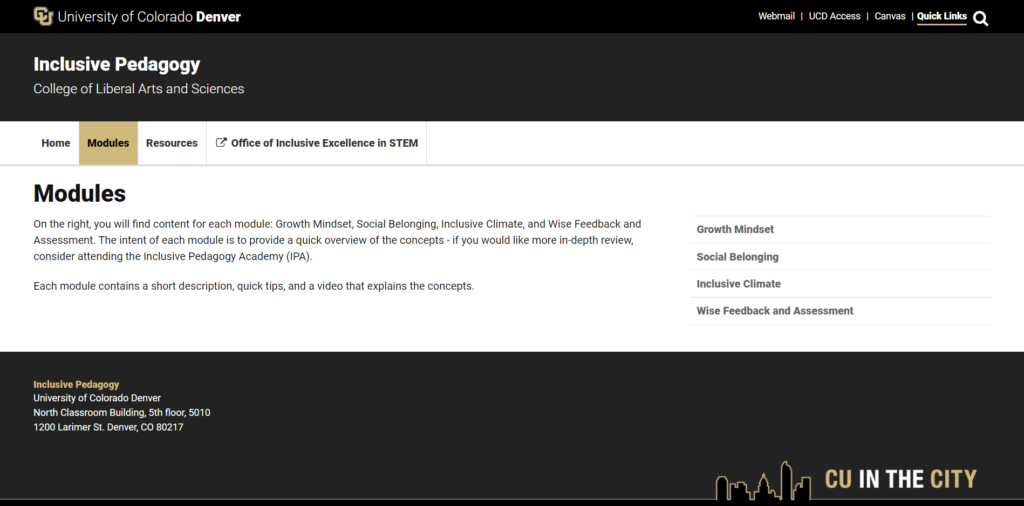
- Micro-Course Webpage – Open-access resource for all faculty
- Canvas Shell – Template course for instructors (enrollment required to view)
- How-To Guide – Instructions for Canvas shell customization
Screenshots
Project Impact
- Open Access: Faculty who couldn’t attend workshops now had self-paced access to inclusive pedagogy resources
- Scalable Resources: The Canvas shell template allows instructors to quickly implement inclusive course design without starting from scratch
- Reduced Barriers: Web-based format eliminated scheduling conflicts and allowed faculty to engage with content when convenient
- Extensibility: The how-to guide empowered faculty to customize the Canvas shell for their specific courses and disciplines
This project demonstrates instructional design from analysis through implementation: identifying barriers, evaluating platforms, designing solutions, developing content, and creating reusable resources that extend impact beyond the initial deliverable.